Decorative
Concrete staining
Color worked into the concrete itself, sealed for patios, interiors and storefronts.
View concrete staining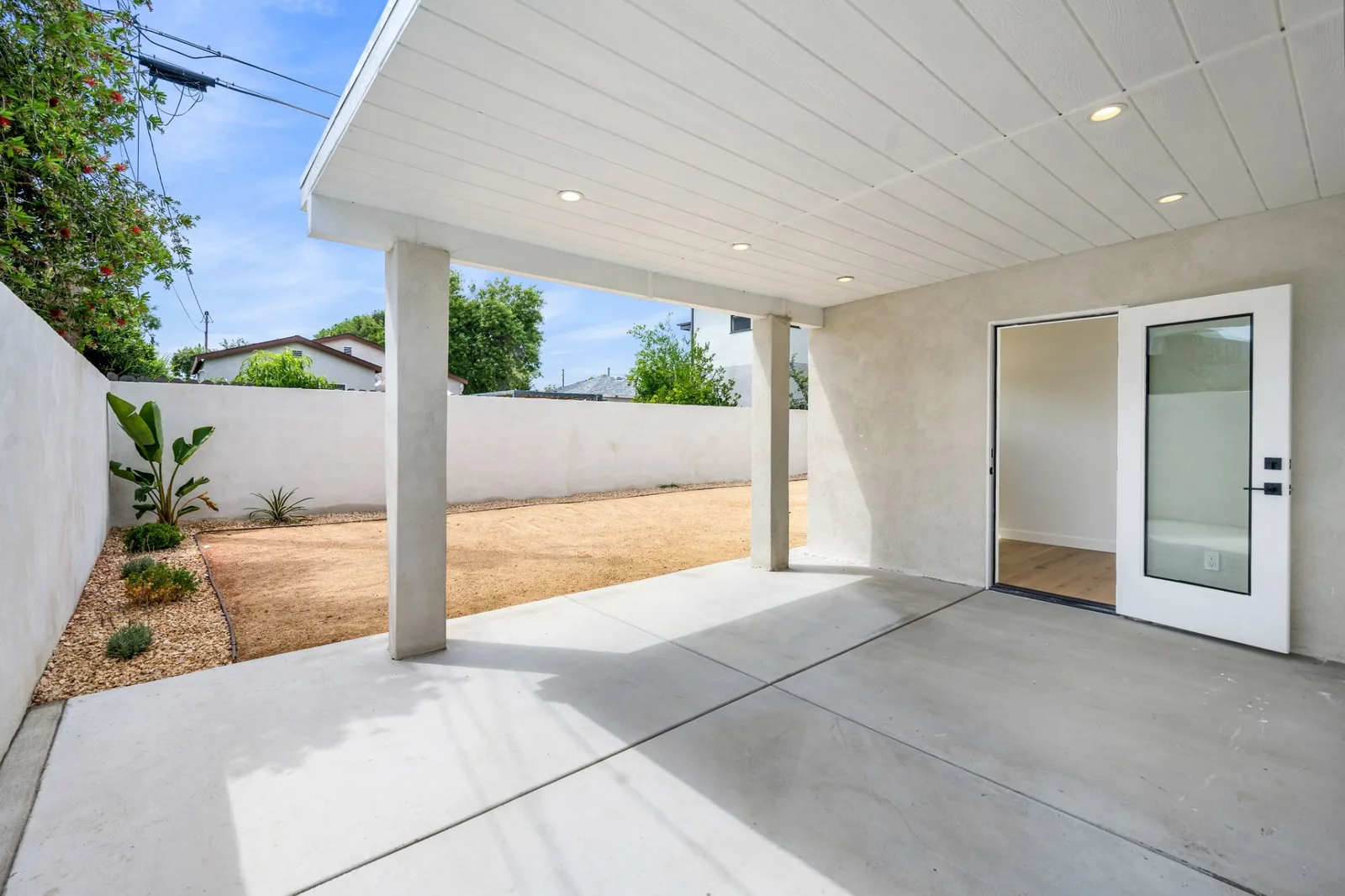
Outdoor
A new patio slab, built on a base made for Jackson soil, finished the way you want and ready to stain or coat.
Much of the Jackson metro sits on Yazoo clay, which swells when wet and shrinks when dry. A patio poured on a thin or poorly compacted base is the one that cracks and settles. We dig out, build and compact a proper base, form the slab, pour and finish it.
Once it has cured, a new patio can be left natural, given concrete staining for color, or coated.
Every job starts with a site visit. We measure, look at the ground, the drainage and how the patio meets the house, then give you a free written estimate with the timings in writing.
A patio is easier to get right on paper than to fix in concrete. On the site visit we mark out the size and shape with you, check where doors open and steps land, and look at how you plan to use the space: a table and chairs, a grill, a walkway to the yard.
We also look at where water goes now. The way rain runs off the roof and across the yard shapes the slope of the slab and where it can safely sit.
Yazoo clay moves. After a wet spell it swells and lifts, and in a dry summer it shrinks and pulls away. Concrete poured straight onto that soil goes up and down with it, and that is where cracked, tilted patios come from.
We excavate the area, remove soft soil and roots, and build a gravel base that is compacted in layers. The base spreads the load, lets water drain away from under the slab and gives the concrete an even, stable surface to sit on. It is the part of the job you never see once the patio is poured, and the part that matters most here.
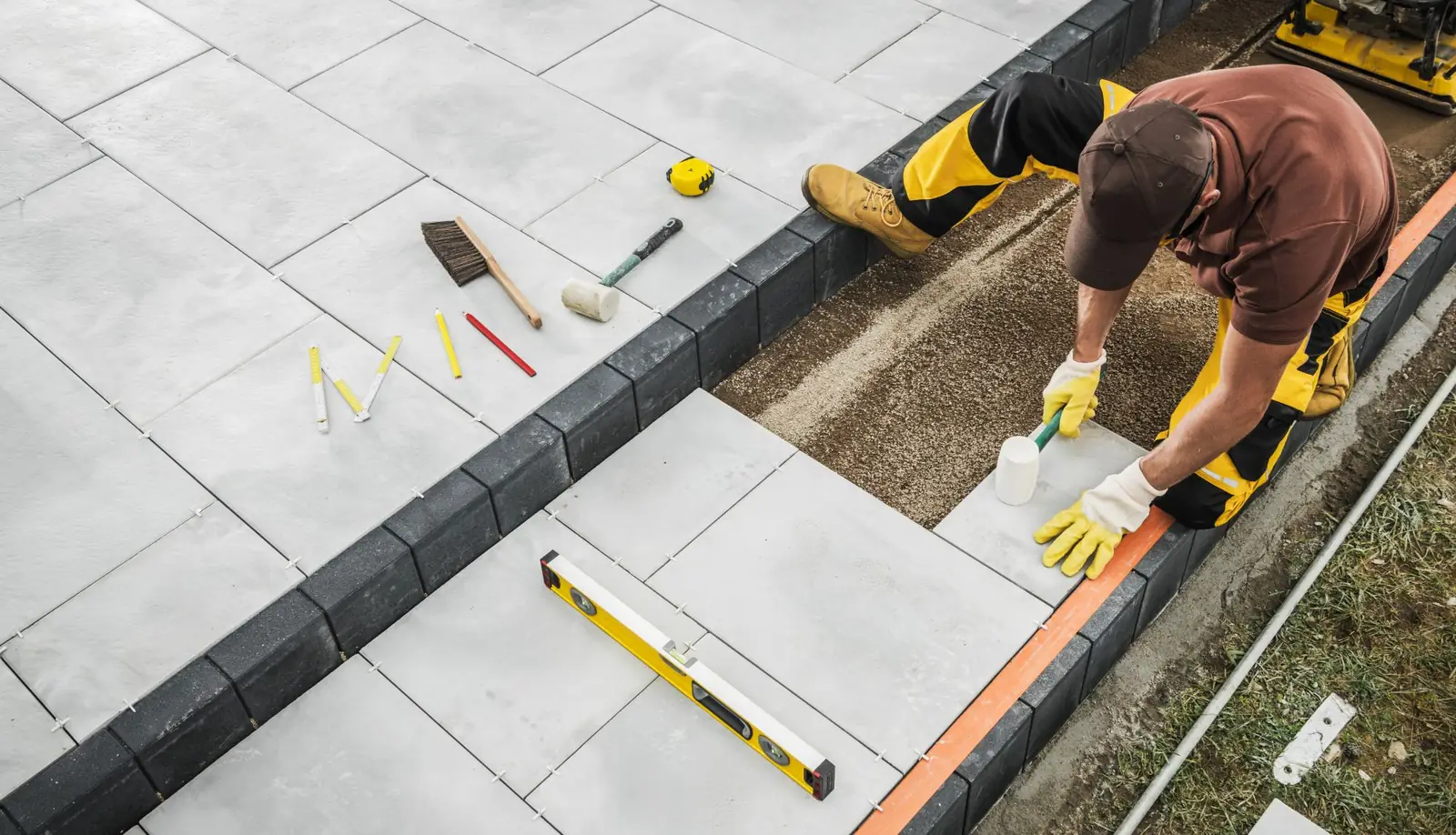
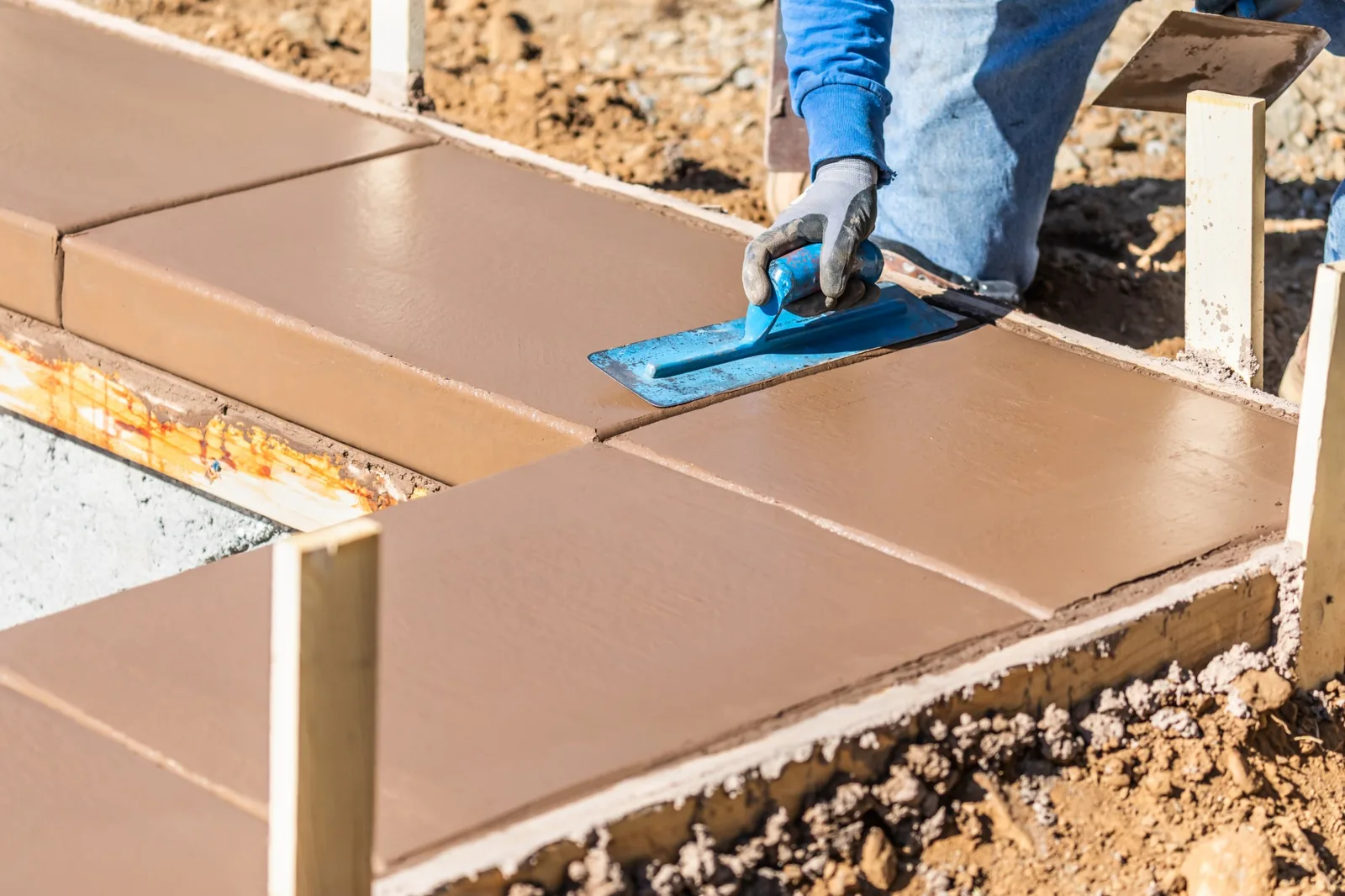
From layout to curing, most patio jobs follow the same steps.
All concrete shrinks a little as it cures and moves with temperature. Control joints are planned lines in the slab that give that movement somewhere to go, so cracks form in a straight line inside the joint instead of wandering across the patio. We space them to suit the size and shape of the slab.
Every patio we pour slopes gently away from the house. Water should run off the surface and away from the foundation, never back toward the door or the slab under the house. In a place with heavy Mississippi downpours, getting the slope right is as important as the concrete itself.
Concrete needs water to cure and gain strength. In Jackson summer heat, the surface can dry out too fast, which weakens the top of the slab and invites surface cracking. We schedule pours for the cooler part of the day where we can and keep the new slab from drying out too quickly while it cures.
Rain is the other risk. A heavy shower on fresh concrete can mark the finish, so we watch the forecast and plan the pour around it.
Concrete keeps getting stronger for weeks after it is poured. Plan on about 7 days before light use such as patio furniture and regular foot traffic, and about 28 days before the slab reaches full strength. Heavy items, such as a large grill station or a hot tub, should wait for full strength.
We give you the exact times for your patio in writing, since weather and temperature during the cure can move them a little.
A plain broom finish is practical, slip resistant and easy to live with. If you want color, concrete staining works into the new slab and is sealed to protect it from sun and rain. If you want a uniform, easy to clean surface, an epoxy floor coating is another option for covered areas.
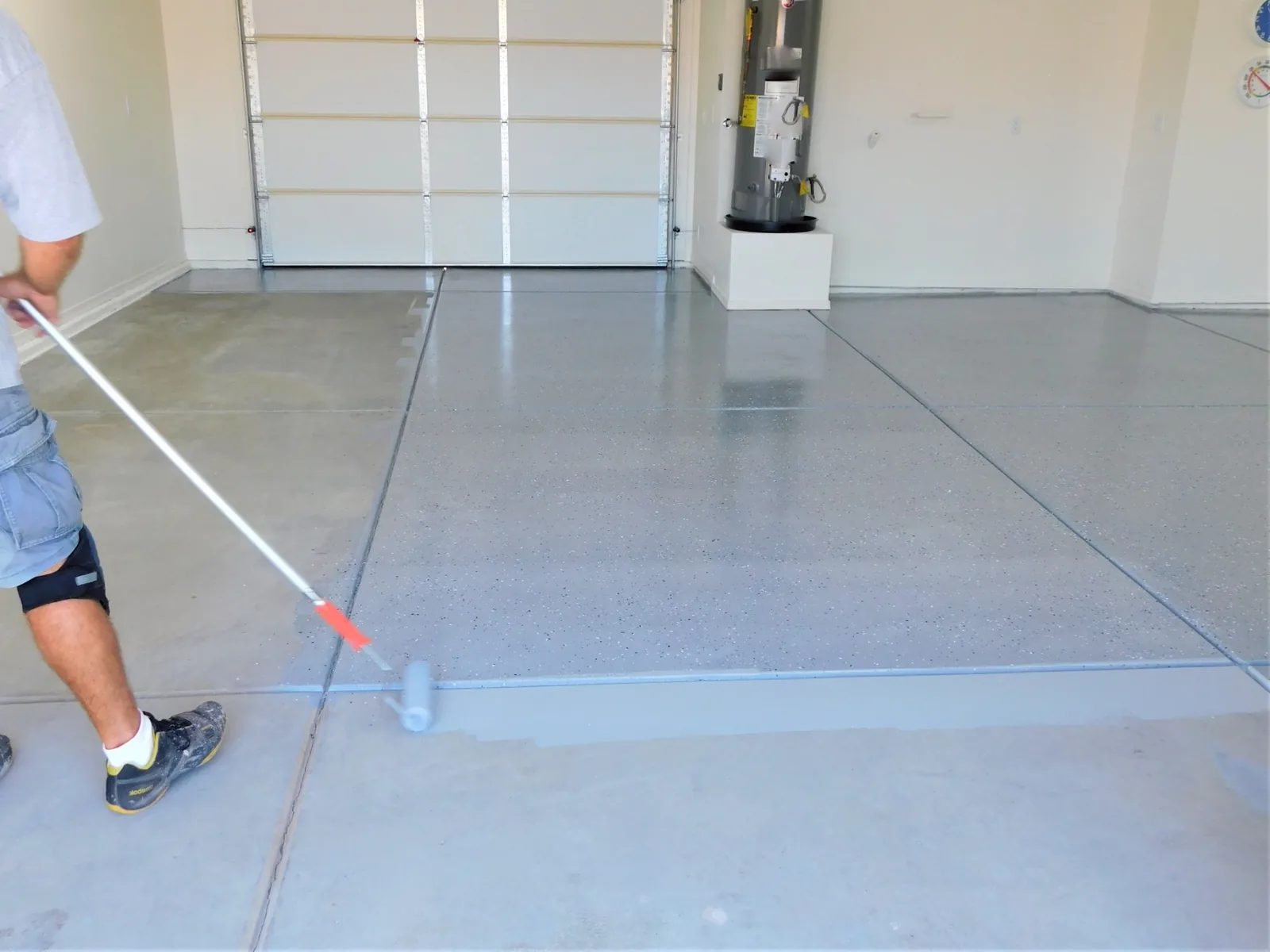
Either way, the slab needs to cure before anything goes on it, so finishes are applied after the concrete has had its time. If you are also thinking about the garage, a garage floor epoxy coating can often be planned around the same visit.
Plan on about 7 days before light use such as furniture and regular foot traffic. Concrete keeps gaining strength for about 28 days, and we give you the times in writing.
Local clay soils move with moisture. A well-built, compacted base and control joints are what keep a patio from cracking and settling.
All concrete can develop small cracks as it shrinks and moves. Control joints, a compacted base and proper curing keep those cracks controlled and in the joints.
Away from the house, so rain runs off the surface and away from the foundation and doors.
Yes, once the concrete has cured. Staining adds color and is sealed against sun and rain, and coating is an option for covered areas.
It depends on the size, the shape, the ground and the finish you want. We measure on site and give you a free written estimate.
Yes. We work across the Jackson metro, including Madison, Ridgeland, Brandon, Flowood, Pearl and Clinton. See our service areas page for the full list.
Every floor carries our workmanship guarantee. Where the coating product carries manufacturer coverage, we pass that along too.
Photos
Related
Color worked into the concrete itself, sealed for patios, interiors and storefronts.
View concrete stainingGround, repaired and coated garage floors that shrug off hot tires, oil and road grime.
View garage floor epoxy coatingDiamond-ground, repaired and epoxy-coated concrete for homes and businesses.
View epoxy floor coatingTell us the size and the slab. We will measure, recommend a system and give you a written price.
Backed by our workmanship guarantee.
Free estimate
Square footage and floor type help us come prepared. Ken follows up to book a time to measure.
Current offer: 10% off any job over $2,500
Backed by our workmanship guarantee. We never share your details.
Limited time offer
Garage, shop or commercial floor anywhere in the Jackson metro. Mention it when you request your free estimate.