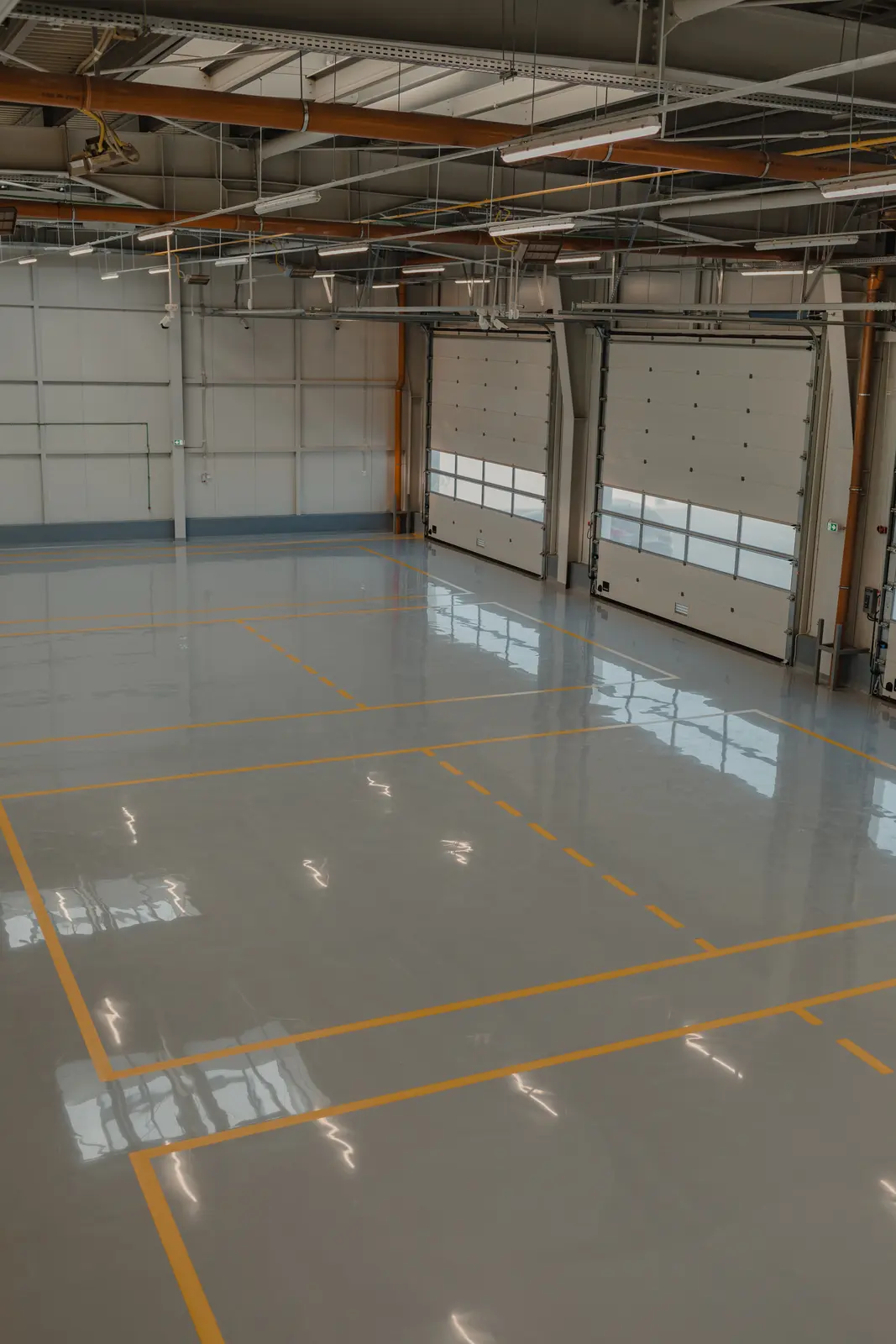
Commercial
Commercial floor coating
Warehouses, shops, kitchens and showrooms, scheduled around your operations.
View commercial floor coating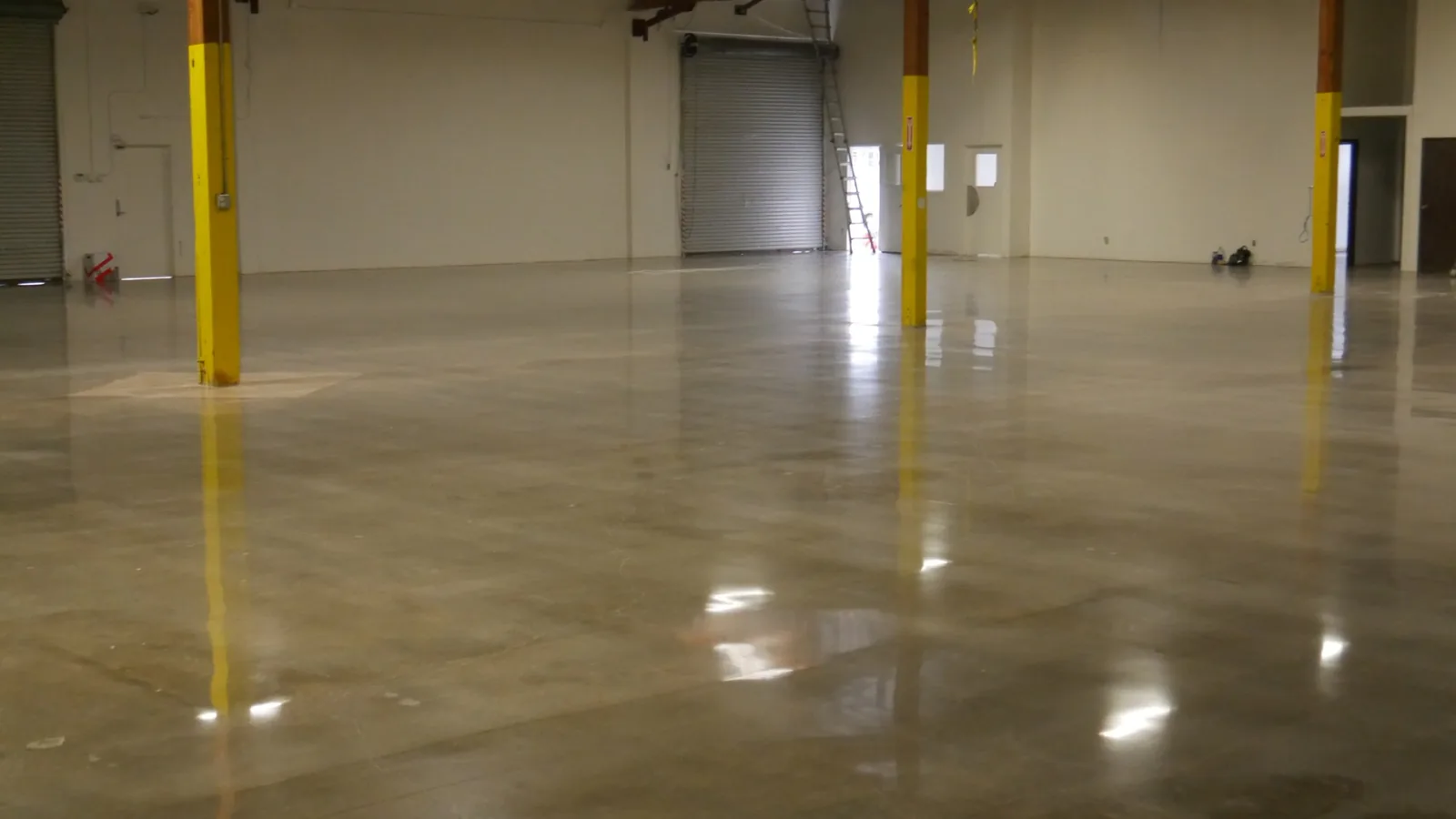
Polished concrete
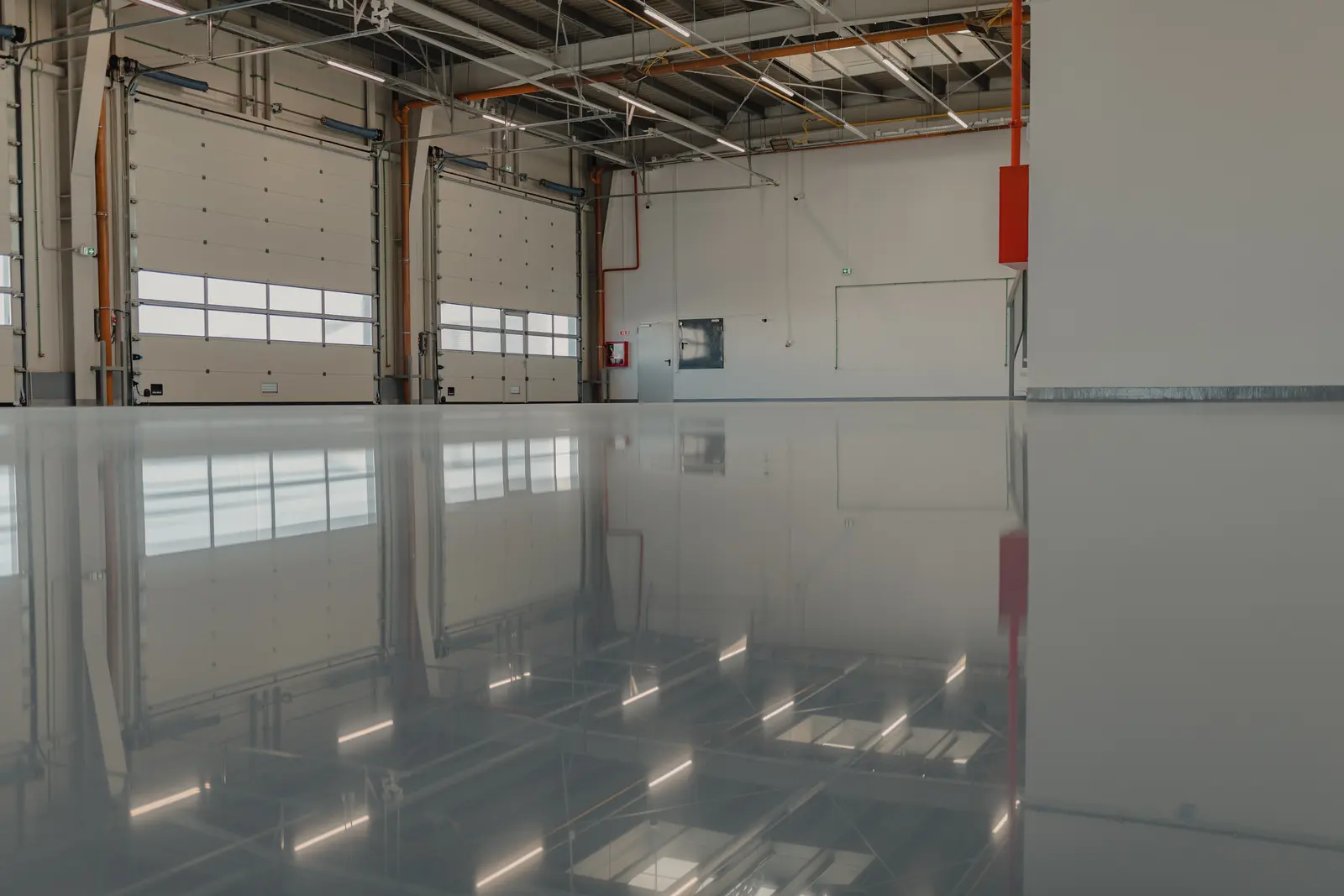
Polishing turns the slab itself into the finished floor. There is no coating on top: the concrete is ground flat, hardened with a densifier and polished to the sheen you choose.
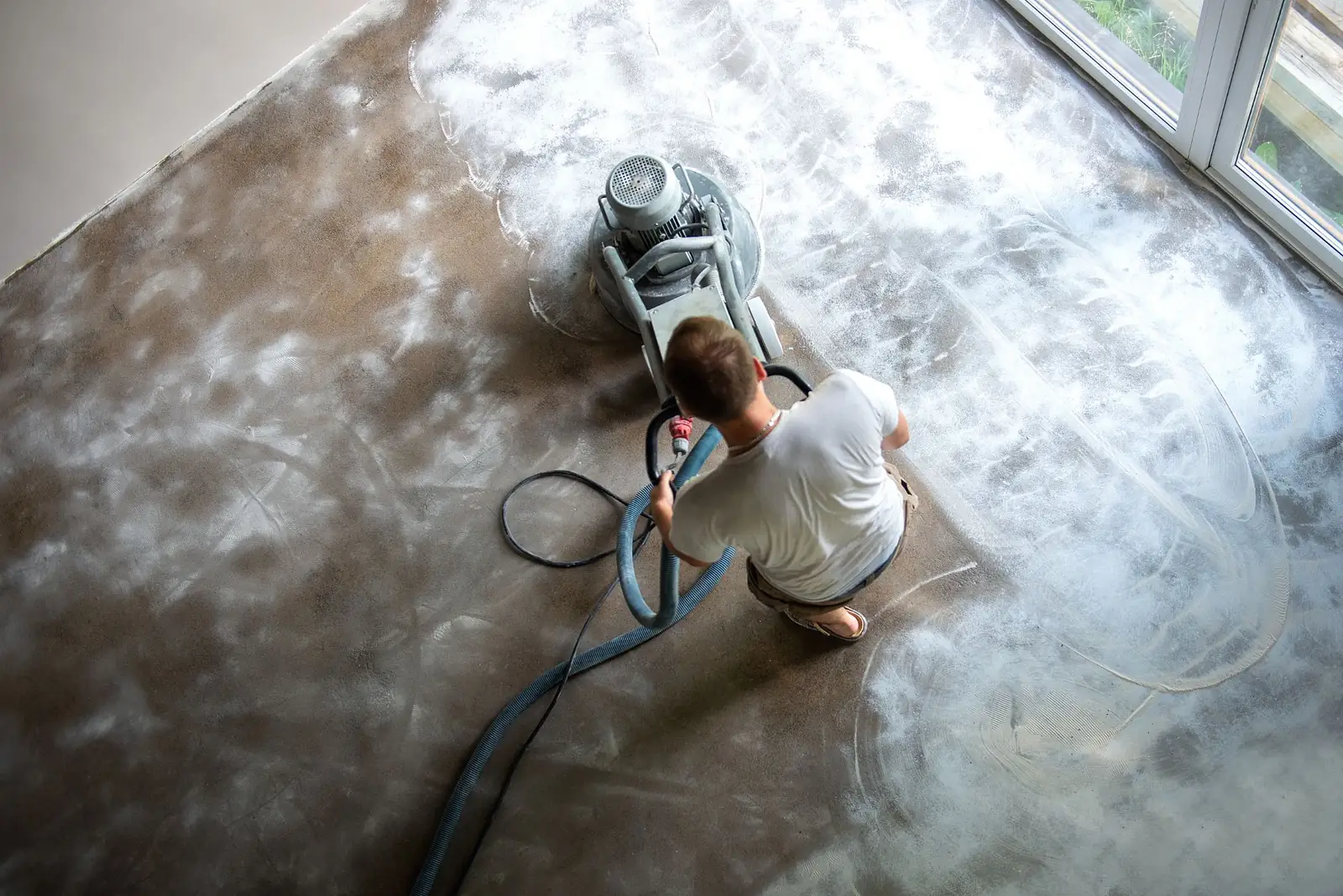
We grind the bare slab through a sequence of progressively finer diamonds, apply a densifier that hardens the surface, then polish it to anywhere from a soft satin to a high gloss. A guard goes on last to help the surface shrug off spills. The result is a very hard floor that cleans up with a dust mop and a damp mop.
Polished concrete suits warehouses, retail floors, offices, shops and modern homes across the Jackson metro. It does not hide stains, patches or cracks the way a coating does, so we look closely at the slab before we recommend it over an epoxy floor coating.
Every job starts the same way: we measure on site, check the slab for moisture and give you a written estimate. You also get a written time for when the floor is back in use, which for polishing is usually the same day.
A polished floor is the top layer of your slab, refined. Grinding removes the weak surface paste and opens the concrete. Each finer diamond takes out the scratches left by the one before it, until the surface is smooth enough to reflect light. The densifier soaks in and reacts with the concrete to make it harder and less dusty.
Because nothing sits on top, there is no film to peel, chip or wear through. That makes polishing a strong fit for floors that see carts, pallet jacks and steady foot traffic, and for owners who want a plain, clean concrete look with very little upkeep.
Most floors follow the same order. The number of grinding passes depends on how rough the slab is and how much shine you want.
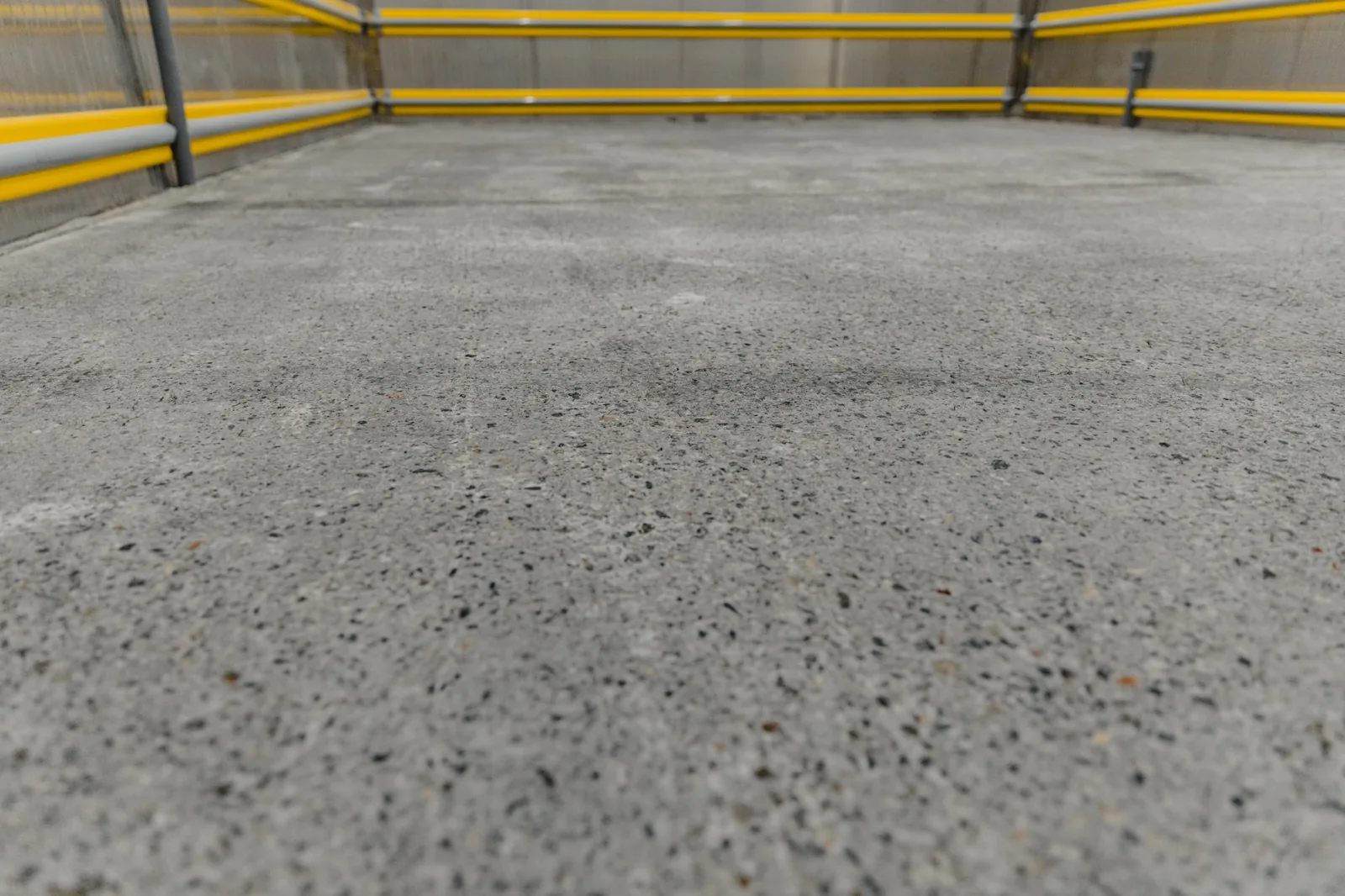
Sheen is set by how far up the diamond sequence we go. A satin finish stops earlier and has a soft, low glare look that suits warehouses and work areas. Semi-gloss is the common middle ground for retail and offices. High gloss takes the most passes and reflects overhead lights, which can brighten a large room.
Higher gloss also shows scuffs and grit sooner in busy lanes, so we talk through how the space is used before you decide. If you want color under the shine, polishing can be paired with concrete staining.
Polishing shows the slab as it is. Old stains, patched areas, saw cuts and aggregate patterns will all be visible in the finish. Some owners like that character. Others want a uniform look, and for them a coating is often the better choice.
Much of the Jackson metro sits on Yazoo clay, which swells and shrinks with moisture and can move slabs enough to open cracks. We fill those before polishing, but a filled crack still shows, and active movement can reopen it. We point these out during the walk-through so there are no surprises.
Polished concrete has no coating to wear through, is quick to return to use and needs very little upkeep. An epoxy coating hides damage and stains, adds color and seals the surface better against oil and chemical spills.
For a shop or warehouse with forklifts and few spills, polishing is often the practical pick. For a garage with oil drips or a slab with a lot of patching, a garage floor epoxy coating usually makes more sense. Larger facilities can compare both on our commercial floor coating page.
Grit is what dulls a polished floor, so a daily dust mop matters most. Damp mop with plain water or a neutral cleaner, and wipe up acidic spills like soda, citrus or vinegar promptly so they do not etch the surface.
Over time, traffic lanes lose some shine. That does not mean regrinding. A periodic clean, burnish and fresh guard brings it back, which is our floor polishing service.
Polished concrete has no coating to wear through and is very low upkeep. Epoxy hides stains and damage, adds color and seals better against spills. The slab and how you use the space decide it.
Often, yes. Old coatings, glue and tile residue are ground off first. We check the slab in person before giving a written estimate.
Usually the same day. There is no coating that needs to cure, so foot traffic can return once the guard is buffed in.
A clean, dry polished floor is generally not slippery. Water, oil or dust on the surface is what makes it slick, so keep it clean and dry, and choose a lower sheen if you are concerned.
No. Polishing shows the slab as it is, including stains and filled cracks. If you want those covered, an epoxy coating is the better fit.
Yes. It suits slab-on-grade homes with an open, modern look, especially living areas and shops. We check the slab first, since flooring adhesive and patches will show in the finish.
Yes. We work across Hinds, Madison and Rankin counties. See our service areas, then call or request a free estimate.
Every floor carries our workmanship guarantee. Where the coating product carries manufacturer coverage, we pass that along too.
Photos
Related
Warehouses, shops, kitchens and showrooms, scheduled around your operations.
View commercial floor coatingColor worked into the concrete itself, sealed for patios, interiors and storefronts.
View concrete stainingWorn, scratched or failing floors cleaned up, repaired and recoated.
View floor refinishingTell us the size and the slab. We will measure, recommend a system and give you a written price.
Backed by our workmanship guarantee.
Free estimate
Square footage and floor type help us come prepared. Ken follows up to book a time to measure.
Current offer: 10% off any job over $2,500
Backed by our workmanship guarantee. We never share your details.
Limited time offer
Garage, shop or commercial floor anywhere in the Jackson metro. Mention it when you request your free estimate.