Core service
Epoxy floor coating
Diamond-ground, repaired and epoxy-coated concrete for homes and businesses.
View epoxy floor coating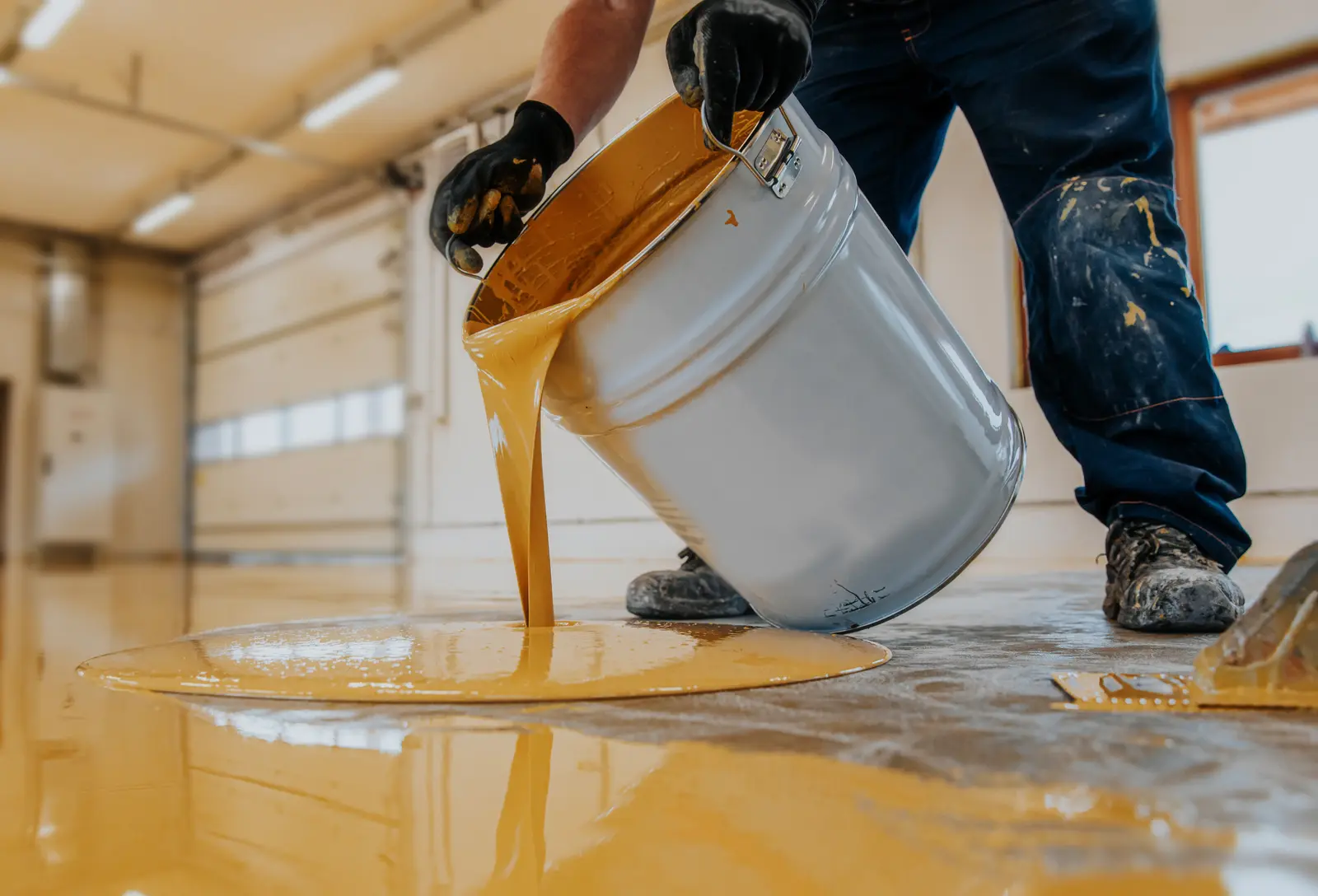
New installs
Installing epoxy on a new or never-coated slab, step by step, so the coating bonds into the concrete and stays there.
New construction, additions, new garage slabs and older concrete that has never been coated all need the same three things before epoxy goes down: the slab has to be cured, dry enough and open enough for the coating to bond. We test for each one, prepare the surface and install the full system in order.
Bare slabs are the best starting point for a coating because there is no old sealer, paint or failed coating to remove. They still need the right timing and the right prep, and most coating failures we see trace back to one of those two being skipped.
For an overview of what epoxy is and where it fits, see epoxy floor coating. If your floor already has a worn or peeling coating, start with floor refinishing.
Fresh concrete is full of water. As it cures, that water works its way up and out through the top of the slab. If epoxy seals the surface while that is still happening, the vapor gets trapped underneath and pushes up as blisters, bubbles or patches that lift.
There is no fixed number of days that makes every slab ready. Mix, thickness, shade and weather all change how fast it dries, and a Mississippi slab poured in a wet spring dries differently from one poured in a dry fall. So we test rather than count days, and we tell you plainly if the slab needs more time.
We moisture check every slab before we schedule the coating. On new concrete we check more than once if the first readings are borderline. Vapor rises through slabs here, especially after heavy rain, and ground under much of the metro is Yazoo clay that holds water and moves with it.
If readings are high, we wait and retest rather than coat over a wet slab. Either way you get the decision in writing before any coating is mixed.
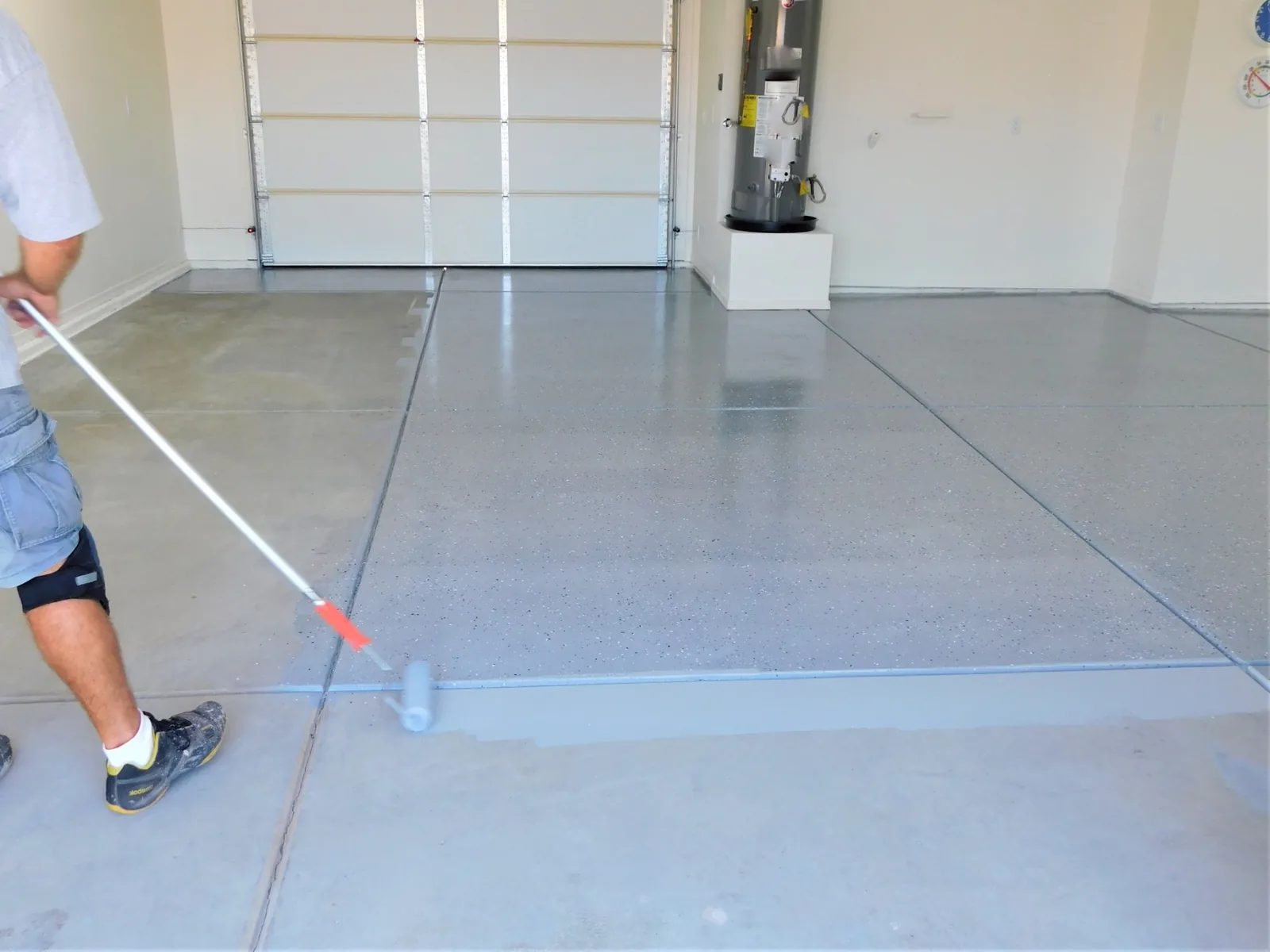
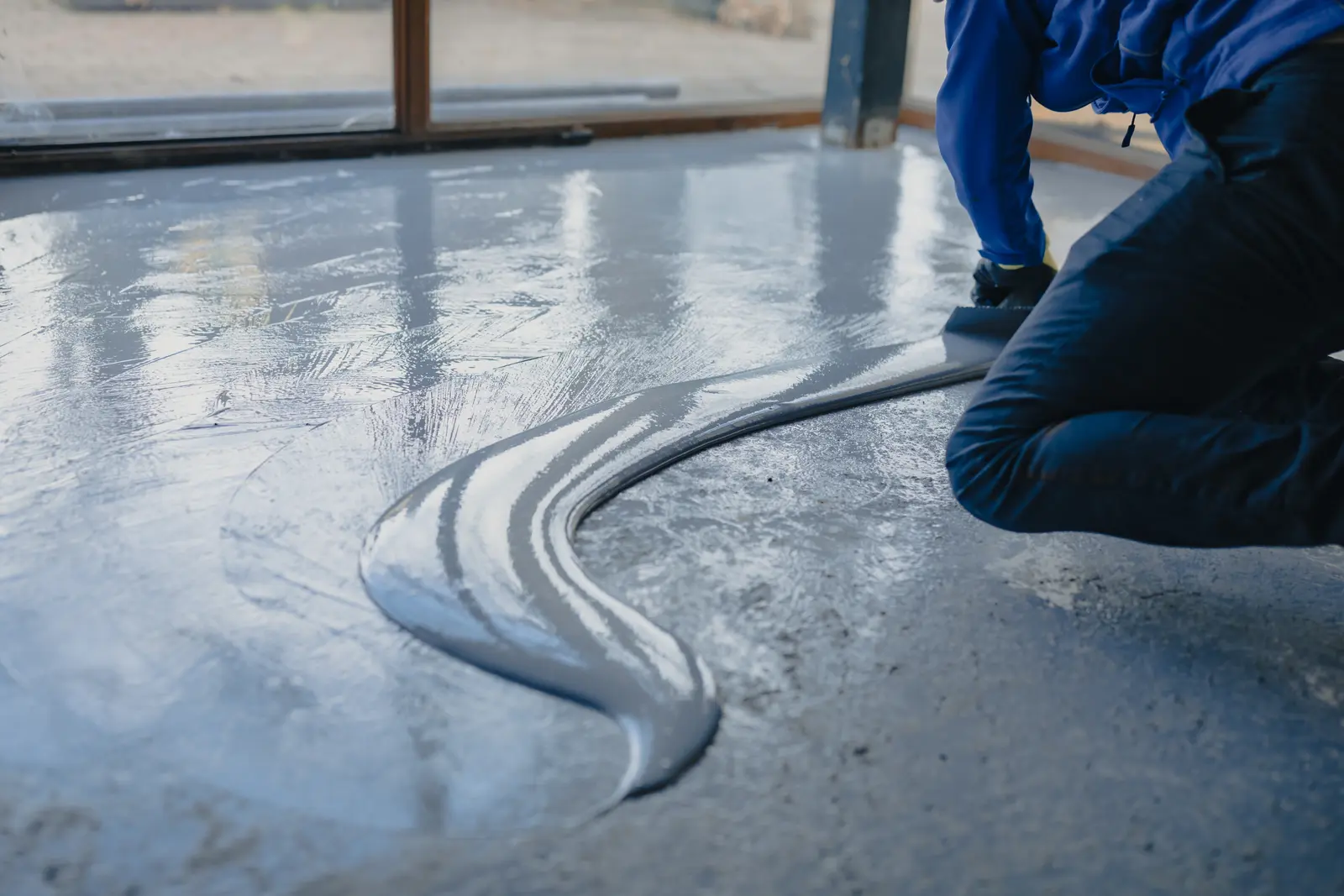
Every install follows the same order. Skipping or rushing a step is what leads to peeling, so we do not.
A new slab often looks smooth and clean, which makes it tempting to roll coating straight on. That smooth top layer is weak, and many new slabs also carry curing compound or sealer from the pour. Coating sits on top of that layer instead of bonding to the concrete underneath.
Diamond grinding takes the surface down to sound, open concrete with a texture the primer can grip. The primer then soaks in and forms the bond that every coat above it relies on. It is the least visible part of the floor and the part that matters most.
On a new build or an addition, the coating is best scheduled near the end of the job, after drywall, paint and heavy trades are finished but before appliances, shelving and vehicles move in. That keeps the new floor from getting scraped, splashed with paint or driven on before it cures.
Tell us the pour date and your move-in date as early as you can. We can test the slab ahead of time, book the install for when it is ready, and give your builder walk-on and full-use times to plan around. Walk-on is usually about 24 hours, with full use or parking about 3 to 7 days later depending on temperature.
Heat speeds up the working time of epoxy, and humid air can leave moisture on a slab that is close to the dew point. In summer we start early, mix in the cooler hours and check slab temperature before each coat. In a garage, keeping the door closed through the hottest part of the afternoon helps the cure.
For most homes the bare slab in question is the garage, so see garage floor epoxy coating for what that job looks like. For shops and warehouses, see commercial floor coating, or book a free estimate and we will test your slab.
It depends on the slab and the weather. We moisture test rather than guess, and schedule the install once the readings are right.
Yes. New slabs have a weak, smooth top layer and often curing compound from the pour. Grinding removes both so the primer bonds to sound concrete.
Only if it is well bonded. Failing coatings are ground off first, and that work is covered on our floor refinishing page.
Most garages and small rooms take a couple of days on site, depending on size and repairs. You can usually walk on the floor after about 24 hours, with full use about 3 to 7 days later.
Trapped moisture can push up under the coating and cause bubbles, blisters or lifting. That is why we test before we install.
Not the whole time. We need access to the space, power and a clear floor, and we will walk you through the timing before we start.
Every floor carries our workmanship guarantee. Where the coating product carries manufacturer coverage, we pass that along too.
Related
Diamond-ground, repaired and epoxy-coated concrete for homes and businesses.
View epoxy floor coatingGround, repaired and coated garage floors that shrug off hot tires, oil and road grime.
View garage floor epoxy coatingWarehouses, shops, kitchens and showrooms, scheduled around your operations.
View commercial floor coatingTell us the size and the slab. We will measure, recommend a system and give you a written price.
Backed by our workmanship guarantee.
Free estimate
Square footage and floor type help us come prepared. Ken follows up to book a time to measure.
Current offer: 10% off any job over $2,500
Backed by our workmanship guarantee. We never share your details.
Limited time offer
Garage, shop or commercial floor anywhere in the Jackson metro. Mention it when you request your free estimate.